
It was the spring of 1958 and the world’s biggest music star was about to vanish. Crowds of girls stood in the streets crying, reporters swarmed the scene, and even parents who once hated his music suddenly felt a strange sadness.
The King of Rock and Roll, Elvis Presley, had been drafted into the United States Army.
Elvis was only 23 years old, but he had already taken over the world. His records sold millions, his movies filled theaters, and his wild stage moves had teenagers screaming and fainting. Parents called him dangerous, church leaders called him sinful, but none of that mattered. He was bigger than life. So when the draft notice came in, nobody thought it would actually happen. People begged for him to be excused. Politicians got letters, the president got letters, even the Army got letters. But the answer was the same. Elvis was going.
The big moment came on March 24, 1958, when Elvis walked into the draft board in Memphis. He smiled for cameras but the look in his eyes told a different story. The fans outside were heartbroken. Some screamed his name, others cried so hard they could not even look up. They were about to see something they never thought they would see.
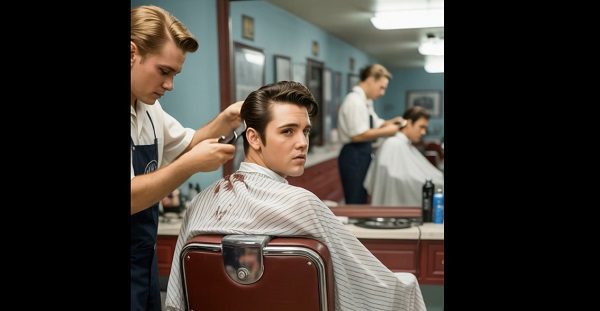
The Army barber pulled out the clippers. The shiny blades buzzed, and one by one, those famous locks of hair hit the floor. The King was no longer the slick haired rebel with the shaking hips. He was just another soldier now. Girls screamed when they saw the photos. Headlines around the world showed Elvis Presley with a buzz cut. To some, it felt like the end of rock and roll itself.
But Elvis surprised everyone. He did not take the easy road. Other famous people sometimes got cushy jobs in the service, but Elvis chose to be a regular soldier. He lived in the barracks, he did drills, he cleaned, and he marched with the rest of them. For two years, he wore the same boots, ate the same food, and slept on the same cots as every other soldier.
There were tough times too. In Germany, he started using pills to stay awake and calm his nerves. Those habits would haunt him later in life. But there were also tender moments. During his time overseas, he met a young girl named Priscilla Beaulieu. She was the daughter of another soldier. At the time she was only fourteen, but she would later become his wife and the mother of his only child.
Back home, America felt empty without Elvis. His manager, Colonel Tom Parker, was smart though. He had saved a pile of unreleased songs, so while Elvis was gone, new records kept hitting the charts. Fans still had his voice on the radio, even if the man himself was far away.
When Elvis finally came home in 1960, something had changed. He stepped off the plane wearing his Army uniform, clean cut and serious. The wild rebel was gone, but in his place was a man who had served his country. Parents who once hated him now respected him. Older folks who once thought he was corrupting the youth now saw him as a patriot.
In a strange way, the Army turned Elvis from a teen idol into an American hero. And maybe that is why his legend never faded.