
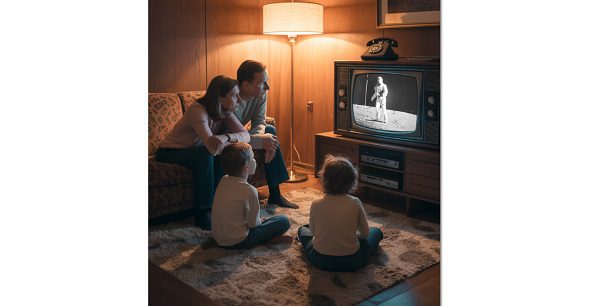
July 20, 1969, was a summer night that no one could forget. The air was hot and still, but in living rooms all across America, something electric was happening. Families pulled their chairs close, kids sat cross legged on shag carpets, and the glow of black and white televisions flickered against the walls.
They were waiting to see a man walk on the moon.
For weeks, the newspapers had been filled with headlines about Apollo 11. People clipped photos of the astronauts, Neil Armstrong, Buzz Aldrin, and Michael Collins. But nothing could prepare them for that night when the words “Live from the Moon” appeared on the screen.
Some schools and churches even set up televisions in their halls. Diners left radios playing in the background while customers leaned in to hear. In small towns, neighbors invited each other over because not every family owned a working set. Children were told, “Sit still, this is history.”
And then it happened.
The shaky black and white picture showed Neil Armstrong climbing down a ladder, his white space suit glowing in the darkness. For a moment, there was only silence. Then his voice crackled through, quiet but clear. “That’s one small step for man, one giant leap for mankind.”
Across the country, people gasped. Some clapped, some cried, and some just sat stunned. Grown men who had fought in wars wiped tears from their eyes. Mothers hugged their children a little tighter. Everyone knew they were watching something no human had ever done before.
The moment had its skeptics too. Some people thought the whole thing looked too strange to be real. They whispered, “Could it be a trick?” But even they could not deny the wave of pride that swept through America that night.
It was more than just science. It was hope. The 1960s had been a rough decade. The Vietnam War dragged on, protests filled the streets, and leaders had been lost to violence. For one night, the noise stopped. America held its breath together.
Some people still remember the tiny details, like how the picture kept fading or how the sound cut in and out. Others remember their fathers fiddling with the rabbit ear antennas to get a better signal, or their mothers telling them to hush during Armstrong’s words. Those small, imperfect moments made it even more real.
After Armstrong, Buzz Aldrin stepped out, and together they planted the American flag. That picture, of the flag standing proud on a world no one thought we could reach, became one of the most powerful images of the century.
Back on Earth, it was late, almost midnight in many places. Parents sent kids to bed, though most were too wired to sleep. Radios replayed Armstrong’s words again and again. The next morning, newspapers sold out within hours. Everyone wanted to keep a piece of that night.
It was a time when television brought the whole country together. No matter where you were, whether in a city apartment or a farmhouse in the Midwest, everyone saw the same ghostly images and felt the same awe.
For those who lived it, the moon landing is not just history. It is a memory of a night when America looked up at the sky and realized that nothing was impossible.