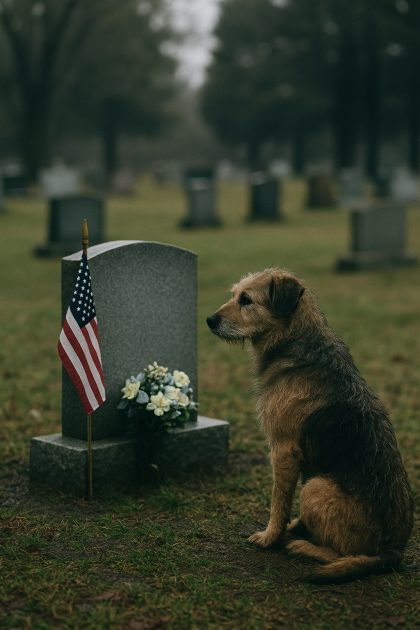
The cemetery was quiet that afternoon, save for the sound of wind rustling through the trees and the soft sniffles of mourners gathered around the fresh grave. The family had come together to say goodbye to John, a veteran who had lived a humble life in their small town. His service had been honorable, but he rarely spoke about it. To his children and grandchildren, he was simply Dad or Grandpa, a man who fixed broken fences, told stories on the porch, and never missed Sunday supper.
The pastor finished his final words, the flag had been folded and presented, and the family lingered, reluctant to walk away. That’s when they noticed the dog.
It appeared from the tree line, a scruffy, thin stray with fur mottled by age and hardship. At first, people thought it had wandered in by accident. But instead of roaming, it walked slowly to the grave and sat down beside it, lowering its head in silence.
The family exchanged confused glances. “Whose dog is that?” one whispered. No one knew. The animal didn’t wear a collar. Its ribs showed through its coat, and yet its eyes carried something more than hunger — they carried purpose.
Day after day, the family returned to the cemetery to leave flowers, and day after day, the dog was there. Always sitting at the same spot, sometimes in rain, sometimes under the burning sun. It never begged for food, never chased after anyone, just kept vigil as though it understood what that place meant.
Word began to spread in the community. Some people started leaving bowls of water and scraps nearby, but the dog never strayed far. It seemed bound to the grave by something unseen.
Curiosity grew, and the family decided to look deeper. They spoke with one of John’s old army friends who had flown in for the funeral. When shown a photo of the dog, the man’s eyes widened with recognition.
“That dog… I’ve seen it before,” he said. “It belonged to a soldier in our unit. They were inseparable overseas. The soldier didn’t make it home, but somehow the dog did. Your father must have taken it in for a while, though he never mentioned it.”
The revelation left the family stunned. Their father, quiet as always, had carried not just his own memories of war but also the bond of his fallen friend’s dog. And now, even after his passing, the animal had returned to honor him.
One rainy afternoon, Emily, John’s granddaughter, brought an umbrella and sat down beside the dog. It didn’t move, didn’t resist. It leaned its head against her leg, eyes closing in weariness. She stroked its wet fur, whispering, “You loved him too, didn’t you?”
That was the moment the family knew they couldn’t leave it there any longer. They brought the dog home, naming it Shadow for the way it had silently guarded the grave. Though old and frail, Shadow seemed to soften in their care, following them from room to room, sleeping by the door as though still on watch.
But every Sunday, the family brought Shadow back to the cemetery. He would sit quietly at the foot of the grave for a while, tail thumping faintly, before walking back with them. It became part of their ritual — flowers for Grandpa, and a visit for the loyal dog who had carried a soldier’s memory across years of silence.
When Shadow finally passed peacefully in his sleep months later, they buried him near the same grave. It felt only right. The veteran and the dog were together again, both symbols of devotion, sacrifice, and love that endures even through loss.
The story spread beyond the town, touching people who had never met John or Shadow. It reminded them all that loyalty doesn’t die, and that sometimes the quietest acts — a dog sitting silently at a grave — speak louder than words ever could.
For the family, the image of that scruffy dog waiting faithfully at the graveside would remain etched in their hearts forever. It was a reminder that love, whether human or animal, doesn’t end with death. It simply finds new ways to keep watch.