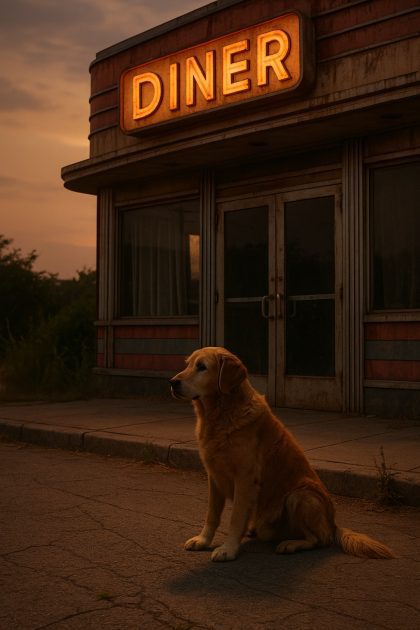
The first time Sarah noticed the old dog, it was sitting quietly outside the abandoned diner on the edge of town. Its fur was shaggy and unkempt, its eyes tired but alert, as if it were waiting for something. She thought it might belong to someone nearby, but day after day, whenever she drove past, the dog was always there. Rain or shine, morning or night, it never moved far from that spot.
At first she tried not to think much of it. People left dogs behind sometimes, though it broke her heart. But there was something different about this one. It didn’t wander the streets looking for scraps, didn’t chase after people, didn’t bark at strangers. It just sat there, staring at the empty door of the diner like it was expecting someone to walk out at any moment.
Sarah finally pulled over one evening. The dog didn’t run when she approached. It just looked at her with those tired brown eyes. She set down a bit of food from her lunch bag, and the dog ate politely, then returned to its place near the door. She crouched beside it, petting its matted fur, and whispered, “Who are you waiting for?”
She asked around town. An older man at the hardware store shook his head sadly. “That’s Frank’s dog,” he explained. “Frank was a veteran. Used to eat at that diner every night with his buddy. They’d sit at the same booth for years. Frank passed away last winter, and the dog… well, it never left. Just keeps waiting.”
The story hit her hard. Sarah couldn’t stop thinking about it. The loyalty of that animal, clinging to the memory of its owner, refusing to give up the place that meant so much to them both. It was as if the dog believed Frank would walk through those diner doors again.
Weeks went by, and Sarah visited often. She started bringing blankets and food. Each time she tried to coax the dog into her car, it resisted. Its eyes never left the diner. People in town began leaving bowls of water nearby, and some even stopped to sit with the dog for a while. It had become a quiet guardian of memory, a living reminder of a bond that even death couldn’t erase.
One evening, Sarah stayed longer than usual. The sun was sinking low, painting the diner windows gold. She stroked the dog’s fur and whispered about her own father, who had been a soldier too. She told the dog how he used to bring her to that very diner when she was little, how they’d share milkshakes and fries. The dog laid its head in her lap, as if it understood.
Finally, one night, Sarah tried again. She opened her car door and waited. This time the dog hesitated, then slowly climbed in. Maybe it was tired of waiting, or maybe it simply trusted her. Tears filled her eyes as she drove it home.
She named him Buddy. At first, he stayed near her front door, as if unsure this was where he belonged. But over time, he followed her to the porch, to the yard, and eventually into the warmth of her home. His eyes softened. He slept peacefully at her feet.
Buddy never forgot the diner, though. Sometimes Sarah drove him back, letting him sit outside for a while. He would watch the door, tail wagging faintly, before returning to her car willingly. It was as if he finally understood his waiting had ended, but his memory would never fade.
In that small town, the story of the dog spread. People spoke of his loyalty, of his devotion to a man who had served his country and shared his life with a faithful companion. To them, Buddy wasn’t just a dog. He was proof that love, in its purest form, can outlast everything — even time and loss.
And every time Sarah looked into his eyes, she felt it too. A reminder that the deepest bonds are never broken. They simply live on in the quiet, waiting hearts that refuse to let go.