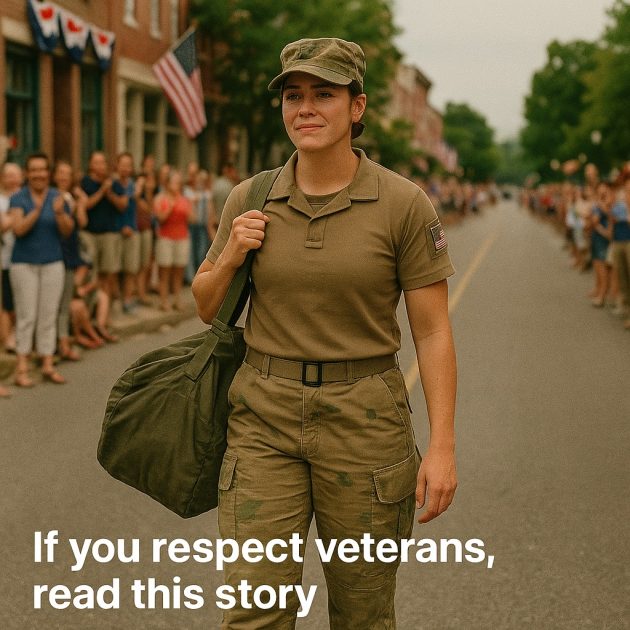
When Emily stepped off the bus in her hometown, she carried only a duffel bag slung over her shoulder and the fatigue of years spent overseas. She expected a quiet return. After all, most people had gone on with their lives while she was away. She imagined she would slip back into town unnoticed, the same way she had slipped out.
Her parents hugged her tightly at the station, tears streaming down their cheeks. But outside of that, she expected silence — no banners, no crowd. She told herself she didn’t need recognition. She had done her duty, and that was enough.
Still, a part of her longed for someone to care. The months of deployment had left her with scars, both seen and unseen. The nights without sleep, the constant hum of danger, the aching homesickness — all of it weighed heavily. Coming home, she thought, might finally bring relief.
When her parents drove her into town, Emily noticed something unusual. Storefronts along Main Street were decorated with flags. Neighbors stood on porches holding signs. Children waved paper banners painted with words like “Welcome Home” and “Thank You.”
Emily blinked in disbelief. “Is this… for me?”
Her father smiled. “Yes. We kept it a surprise.”
As the car turned the corner, she saw the crowd. Hundreds of people had gathered near the town square. Old friends, former teachers, the local pastor, even the grocery clerk she hadn’t seen in years — all stood waiting. A marching band played a tune that echoed down the street.
Emily stepped out of the car, her knees trembling. Applause erupted, mixed with cheers and shouts of her name. Strangers shook her hand. Children handed her flowers. An elderly woman pressed a homemade pie into her arms with tears in her eyes.
For a moment, Emily felt overwhelmed. She had spent so long bracing herself against indifference, convincing herself that no one noticed. Yet here they were, the entire community, showing that they had not forgotten.
The mayor stepped forward with a short speech, his voice carrying over the crowd. “Emily represents the very best of us. She served with honor, and today, we honor her.”
Emily wiped at her eyes, unable to stop the flood of emotion. She realized that the weight she carried didn’t have to be borne alone. Her community, small as it was, stood behind her.
Later that evening, after the banners were taken down and the crowd dispersed, Emily sat with her parents on the porch. She looked at the stars overhead, the same stars she had stared at countless nights while deployed. But tonight, they felt different. They felt safe.
Her father leaned over and said softly, “You thought no one would care. But you were wrong. You’ll always matter here.”
That night Emily slept deeply for the first time in years. She carried no medals, no parades of generals, but she carried the love of her community. And in many ways, that meant more than anything.
Her story became one told often in the town — not just about war, but about the importance of remembrance. Veterans carried burdens, but they also deserved gratitude. And Emily’s homecoming reminded everyone that service should never be met with silence.